Choosing the right Liquid Pouch Packaging solution is not simply a matter of selecting a flexible bag. Global buyers must examine product viscosity, filling accuracy, seal strength, transport conditions, shelf life, and local consumer habits. A pouch that performs well for liquid soap may fail with sauces, juices, detergents, or nutritional products. Small details matter. A weak corner seal can create costly leakage inside a shipping carton.
Jorge Izquierdo, a packaging industry expert associated with PMMI, offers a useful perspective: “Packaging decisions must connect product protection, production efficiency, and customer convenience.” That principle guides this overview of seven practical pouch solutions. Each option is considered through real purchasing concerns, including material structure, spout design, machine compatibility, storage efficiency, and recycling expectations. The best choice is rarely the cheapest one. It is the option that remains reliable from the filling line to the customer’s hands.
Performance must be tested.
Buyers should still question every recommendation. Supplier claims can sound impressive, yet actual results may change with temperature, pressure, filling speed, and handling. A pouch tested only in a controlled factory may behave differently during long-distance transport. This guide therefore compares strengths, limitations, and suitable applications without pretending that one format fits every market. Some details may require further validation. That is normal. Careful sampling, seal testing, and pilot production remain essential before a global purchase decision.
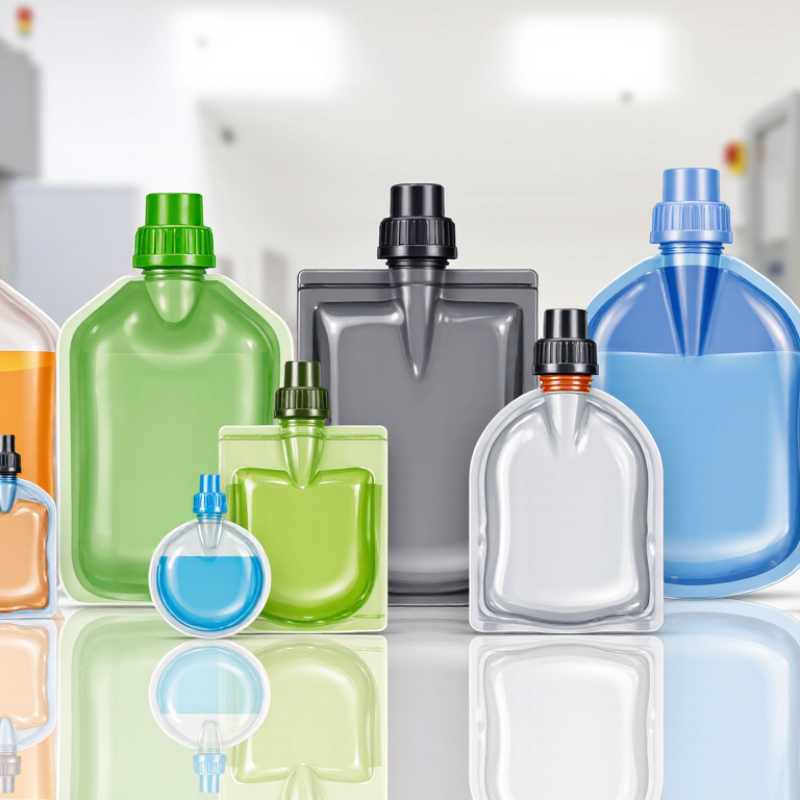
Liquid pouch packaging starts with the product, not the pouch shape. Water, sauces, detergents, and concentrates need different barrier levels and sealing methods. A multilayer film can protect against oxygen, moisture, light, and punctures, but it may reduce recyclability. There is no perfect structure yet.
The Flexible Packaging Association’s 2024 industry report values the United States flexible packaging market at about $40 billion in 2023. Smithers’ global flexible packaging research expects the market to approach $300 billion by 2028. These figures show strong demand, but international buyers should examine more than market growth. Check film thickness, pouch dimensions, spout position, filling temperature, and seal strength. A pouch that looks efficient on paper can fail in a humid warehouse. That lesson is easy to overlook.
Tips: Request product-specific samples before approval. Test filled pouches after vibration, compression, freezing, and heat exposure. Ask for migration, food-contact, and quality documents that match the destination market. Confirm whether the pouch uses mono-material or laminated layers. Also review the supplier’s batch records and inspection method. Small print errors can become expensive.
For export projects, confirm carton loading and pallet patterns early. A flexible pouch saves space, but weak secondary packaging may cause leakage during long transport. Use measurable acceptance criteria, such as burst pressure, drop performance, and seal integrity. Independent laboratory testing adds credibility. Still, buyers should leave room for improvement; the first specification is rarely the final one.
Typical commercial fill-volume ranges for common liquid pouch formats
These representative ranges help international buyers match pouch formats with product volume, distribution requirements, and dispensing needs. Actual capacity depends on pouch dimensions, material structure, filling equipment, sealing specifications, and transport regulations.
Liquid pouch selection should follow product behavior, filling speed, and consumer handling. Smithers’ The Future of Global Flexible Packaging to 2028 reports continued growth in flexible packaging demand, supported by lightweight structures and material efficiency. For export buyers, seven formats deserve close attention. Three-side-seal sachets suit sauces, samples, and single-use personal-care liquids. Stick packs work well for narrow-dose beverages, gels, and functional liquids. Stand-up pouches provide shelf stability for detergents, concentrates, and refill products. Spouted pouches improve controlled pouring for baby food, household cleaners, and viscous liquids.
PMMI’s Beverage Packaging Trends research highlights convenience, portability, and sustainability as important packaging development drivers. These priorities affect closure choice, spout diameter, barrier layers, and secondary cartons.
A thin pouch is not automatically a better pouch. My practical concern is often overlooked: a package can look efficient but fail during hot transport or repeated opening.
Retort pouches support heat-processed foods requiring extended ambient storage. Their multilayer barrier structure needs careful validation after sterilization. Bag-in-box pouches fit bulk liquid products, including edible oils, syrups, and institutional beverages. They reduce handling frequency, but dispensing equipment must match the outlet design. Shaped pouches create stronger visual differentiation for premium liquids and promotional formats. However, unusual contours can increase tooling costs and filling complexity.
Global buyers should request drop tests, seal-strength results, migration documentation, and accelerated shelf-life data. A perfect format rarely exists. The strongest solution balances product protection, filling capability, logistics, and real consumer use.
Liquid pouches succeed when structure matches product risk. Buyers can consider seven practical formats: standard three-side seal, stand-up pouch, spouted pouch, fitment pouch, retort pouch, aseptic pouch, and bag-in-box liner. Each option balances protection, filling speed, storage, and consumer handling. Polyethylene offers flexible sealing, while polyester or nylon can improve strength and puncture resistance. The choice is rarely simple.
Barrier layers control oxygen, moisture, light, and aroma transfer. High-barrier films often combine polymers with aluminum or transparent oxide coatings. According to Smithers’ 2024 flexible packaging outlook, the global market is expected to surpass US$300 billion by 2028. That growth reflects demand for lighter formats, but lightweight does not mean fragile. A pouch with a weak seal still fails quickly.
Closure design needs equal attention. Screw caps, spouts, fitments, and dispensing valves must resist leakage after repeated opening. The Food and Agriculture Organization reports that 13.2% of food is lost after harvest and before retail. Better packaging cannot solve every loss point, yet reliable barriers and closures can reduce exposure during transport. Testing should include drop impact, seal strength, torque, pressure, and temperature cycling. Real filling trials matter.
A clean pouch is not automatically a safe pouch. Migration testing, compatibility checks, and documented quality controls support dependable global purchasing. Some suppliers overstate recyclability. That claim deserves careful review, especially when multilayer barriers are involved.
7 Best Liquid Pouch Packaging Solutions for Global Buyers
How to Compare Filling, Branding, and Shipping Requirements
Choosing a liquid pouch solution begins with the product, not the artwork. Water-like drinks, sauces, oils, and gels require different filling systems. During packaging evaluations, I check viscosity, temperature, particle size, and target fill volume. These details influence nozzle design, filling speed, and seal strength. A pouch that works for thin liquid may fail with a thick sauce.
Branding must support production and legal requirements. Review print quality, color consistency, barcode readability, and available panel space. The film structure should protect the contents from light, oxygen, and moisture when needed. Leave room for batch codes, ingredient details, recycling marks, and destination-specific information. Small details matter. A beautiful design can still create costly problems if the code area is too narrow.
Shipping changes the comparison again. Measure filled pouch dimensions, carton count, pallet height, and expected transport conditions. Flexible packaging can reduce volume, but weak seals may suffer during stacking or long-distance handling. Request drop tests, leak tests, and accelerated storage checks before placing a large order. I have seen specifications look excellent on paper, yet perform poorly after rough distribution. That gap deserves honest review. Freight savings may also disappear when cartons need extra protection or unusual pallet layouts. Compare total delivered cost, not only the pouch price.
Choosing among seven liquid pouch solutions requires more than comparing unit prices. Spouted stand-up pouches suit sauces and detergents. Flat sachets reduce material use for samples. Retort pouches handle heat-processed foods, while bag-in-box liners support larger volumes. Three-side seals, four-side seals, fitment pouches, and high-barrier laminates serve different shelf-life needs. Smithers’ The Future of Flexible Packaging to 2028 projects the global flexible packaging market will grow from about US$201.8 billion in 2023 to US$231.1 billion in 2028. That growth increases supplier choices, but also makes quality verification harder.
Calculate total packaging cost per saleable unit, not per pouch. Include film, closures, printing plates, tooling, filling speed, minimum order quantities, freight, customs, storage, leakage, and rejected packs. Ask suppliers for seal-strength testing, drop-test records, migration documentation, and production traceability. PMMI reports that packaging machinery buyers increasingly prioritize automation, flexibility, and labor efficiency. A cheaper pouch may perform poorly on an older filling line. I have seen small seal variations create large waste during humid transport. That risk is easy to underestimate.
Tips: Request three comparable quotations using identical specifications. Test samples on your actual liquid and filling equipment. Compare landed cost after six months, not only the first invoice. Leave room for improvement; the first specification is rarely perfect. Verify material claims independently, because sustainability language can hide trade-offs.
Match the pouch with product behavior, filling speed, and consumer handling. Sachets suit samples and single-use liquids. Stand-up pouches suit refills and concentrates. Spouted pouches support controlled pouring. There is no universal winner.
Confirm film thickness, pouch dimensions, spout position, filling temperature, and seal strength. Request product-filled samples. Check whether the structure is mono-material or laminated. Small printing errors can become expensive.
Test filled pouches after vibration, compression, freezing, and heat exposure. Include drop impact, burst pressure, seal strength, torque, and temperature cycling. Use measurable acceptance limits. A visual check is not enough.
Barrier layers limit oxygen, moisture, light, and aroma transfer. Polymer films support sealing and flexibility. Polyester or nylon can improve puncture resistance. Aluminum or transparent coatings may improve protection. More layers can reduce recyclability.
No. A thin pouch may save material and space. However, weak seals or cartons can cause leakage during transport. Check carton loading and pallet patterns early. Lightweight is not automatically reliable.
Screw caps, spouts, fitments, and valves should resist leakage after repeated opening. Match the outlet with the filling and dispensing equipment. Test closure torque and pressure. A cap that feels tight may still leak.
Retort pouches suit heat-processed foods needing extended ambient storage. Aseptic structures may support controlled filling conditions. Validate the pouch after sterilization or thermal processing. The barrier can change under heat.
Request migration, food-contact, quality, and compatibility documents for the destination market. Review batch records and inspection methods. Ask for accelerated shelf-life data. Recyclability claims need careful verification.
They can reduce handling frequency for bulk liquids, oils, syrups, and institutional beverages. The dispensing equipment must match the outlet design. Secondary packaging still matters. A flexible liner needs strong outer protection.
Probably not. Real filling trials may reveal unexpected failures. Improve the specification after testing transport, storage, and repeated opening. Leave room for adjustment. The first version is often only a useful draft.
Liquid Pouch Packaging offers international buyers a flexible and efficient way to protect, present, and distribute liquid products across diverse markets. This guide introduces essential pouch packaging principles and compares seven practical formats, including spouted pouches, flat pouches, stand-up pouches, sachets, bag-in-box liners, retort pouches, and high-barrier solutions. Each format is matched with suitable applications based on product viscosity, serving size, shelf-life expectations, convenience, and handling requirements.
The article also explains how film structures, barrier layers, seals, and closures help protect products from oxygen, moisture, light, leakage, and contamination. Buyers will learn how to evaluate filling methods, printing and branding options, order quantities, shipping efficiency, and storage conditions. Finally, it provides a practical framework for selecting reliable suppliers and controlling total packaging costs by considering tooling, materials, quality testing, logistics, and long-term supply stability rather than focusing only on the initial unit price.

ESD-PAC VINA