Choosing the right Packaging Bags is a practical business decision, not merely a design exercise. The bag must protect the product, fit the filling process, and support customer expectations. A coffee roaster may need strong oxygen and moisture barriers, while a frozen-food producer may prioritize seal strength and puncture resistance. The details matter.
Industry data shows why this decision deserves careful attention. The Flexible Packaging Association reported that the U.S. flexible packaging market generated approximately $40 billion in annual sales in recent years. Smithers’ global flexible packaging research also forecasts continued market expansion through 2028, supported by convenience foods, e-commerce, and lightweight formats. These figures indicate strong demand, but they do not automatically identify the best bag for every product. No report can replace product testing.
A reliable selection process begins with the product’s real conditions. Consider moisture, oxygen, light, temperature, grease, shelf life, and shipping pressure. Then compare materials, including polyethylene, polypropylene, paper laminates, and high-barrier films. Check whether the bag runs smoothly on existing equipment. A beautiful pouch is useless if its zipper jams or its seals split during transport.
Sustainability requires precision, too. Packaging experts increasingly evaluate material reduction, recycled content, recyclability, and end-of-life infrastructure together. The Ellen MacArthur Foundation has emphasized designing packaging for a circular economy, yet local recycling systems remain uneven. That is easy to overlook. Test bags with actual products, storage periods, and handling conditions before committing to large volumes. A small pilot can reveal costly weaknesses. Reliable choices combine supplier evidence, laboratory results, and hands-on experience.
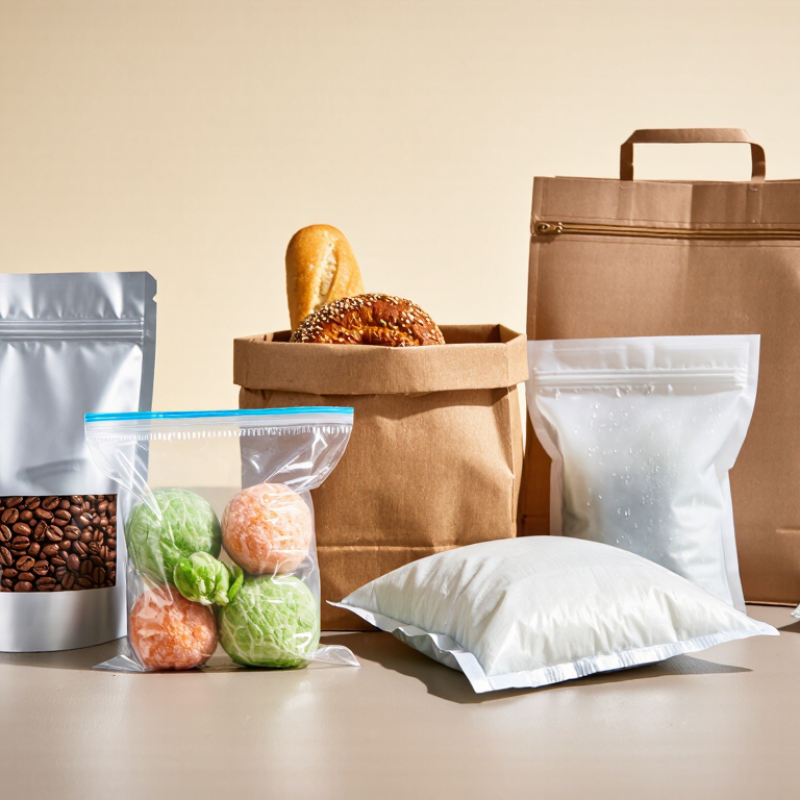
Choosing packaging bags starts with the product, not the bag’s appearance. I examine weight, shape, moisture, oil, sharp edges, and expected shelf life. Powdered products may need strong seals and dust control. Fresh produce may require ventilation. Heavy parts need reinforced seams and puncture resistance. Small details matter.
I have seen an attractive bag fail during transport because its seal was too narrow. That experience changed my testing process. I now fill sample bags, stack them, shake them, and store them under realistic conditions. I check leaks, wrinkles, odors, and opening comfort. The best material on paper may not suit an automated filling line. Product temperature can also affect sealing. Test it at actual operating speed.
Packaging requirements should include dimensions, closure type, barrier level, printing needs, and disposal expectations. Ask how customers will carry, open, store, and reuse the bag. Confirm material specifications and request documented quality checks from suppliers. Food-contact or other regulated applications require suitable compliance evidence for the target market. Do not rely on vague claims. I sometimes over-specify protection, which raises cost and material use unnecessarily. That deserves review. A practical choice protects the product and fits the business’s real process.
Understanding Your Product and Packaging Requirements
The chart shows a practical priority model for selecting packaging bags. Moisture and oxygen barrier are especially important for dry food and powders, while seal strength and puncture resistance become more critical for liquids and heavy products. Sustainability and cost should be evaluated together with product protection, shelf life, transport conditions, and applicable regulations.
The right bag starts with the product, not the artwork. A powder, oily snack, frozen item, or sharp component creates different packaging demands. During packaging trials, I check moisture, oxygen, light, temperature, and handling risks before choosing a material.
A single-layer polyethylene bag can suit simple, dry products. It is flexible, sealable, and often cost-effective. Polypropylene may provide better clarity and stiffness. For products needing stronger protection, a multilayer structure can combine strength, barrier performance, and reliable sealing. Polyester may support toughness, while foil or a high-barrier film can reduce light and oxygen exposure. Each layer should serve a clear purpose.
The seal matters as much as the film. A strong-looking bag can still fail at its weakest seal. Test seals after filling, compression, vibration, and temperature changes. Leave enough headspace for products that shift during transport. I once focused too heavily on film thickness and overlooked corner stress. The bag passed a visual check but failed during drop testing. That mistake changed my process.
Paper-based structures may improve appearance and recyclability goals, but they can need a protective coating or inner layer. Check whether the final structure matches available recycling systems. Also verify food-contact suitability when relevant, using current supplier documents and independent test results. Small samples are useful, but production trials reveal more. Get it wrong early. That is cheaper.
Choosing the right packaging bag starts with understanding how products move and wait. Storage conditions can be as important as appearance. A dry-goods seller may need a strong woven bag with a sealed inner liner. Moisture-sensitive products often require high-barrier film and dependable heat seals. Cold storage creates different demands. Materials should remain flexible without cracking.
Transport adds practical pressure. Bags face stacking, vibration, sharp corners, and repeated handling. I recommend checking tear strength, seal strength, and load capacity through sample tests. Fill a trial bag with the real product, then stack it for several days. Measure leakage, deformation, and seal damage. A gusseted shape may improve shelf stability, while reinforced handles can reduce carrying strain. Small details matter.
Customer needs should guide the final choice. A resealable opening helps households use products gradually. Clear panels can show quantity, but they may reduce light protection. Easy-open features improve convenience, yet weak notches can cause messy tearing. I once selected a bag that looked excellent on a display shelf but felt awkward in one hand. That mistake changed my testing process. Appearance is not performance. Ask whether customers can store, carry, open, and close the bag without frustration. Confirm material specifications, printing durability, and applicable packaging requirements with qualified suppliers. Sample testing remains essential, because real handling often reveals problems that product sheets miss.
When selecting packaging bags, sustainability should be measured, not assumed. A paper-like finish does not always mean lower environmental impact. Check the material source, recycled content, production process, and end-of-life instructions. Some bags use mixed layers for strength, but these layers can make recycling difficult. Ask suppliers for testing documents and clear disposal guidance. Looks can mislead.
Customization should support both function and responsible use. Accurate sizing can reduce empty space, excess material, and shipping volume. Consider handles, closures, thickness, and moisture resistance based on real product conditions. A bag for lightweight clothing needs different protection than one for oily or fragile goods. Request samples before ordering. Measure twice. I have seen attractive prototypes fail because their seams weakened during repeated handling.
Brand presentation depends on more than a printed logo. Color accuracy, surface texture, typography, and consistent finishing shape the customer’s first impression. Water-based inks may suit some applications, but performance depends on the material and printing process. Ask about abrasion testing and color stability before approving a large production run. A premium appearance can become wasteful if the design requires unnecessary layers or oversized dimensions. I have learned that the most beautiful option is not always the most responsible one. Test the bag in actual use, including storage, transport, opening, and disposal. That matters.
Choosing packaging bags starts with the product, not a supplier’s catalogue. A dry powder may need strong seals, while oily goods require barrier protection. In trial runs, measure filling speed, drop resistance, seal strength, and storage conditions. Small details matter. A bag that looks cheap can create costly leaks. We once underestimated film thickness and lost valuable packing time. That mistake changed our testing process.
Price per bag is only one part of the total cost. Compare materials, printing plates, tooling, freight, inspection, rejected units, and minimum order quantities. Ask suppliers for written quotations with every charge listed separately. Request samples made through the same production method, not handmade mock-ups. Check factory capacity, quality records, communication speed, and backup material sources. A low quote may hide long lead times. Confirm production schedules in writing, including approval and shipping dates.
Match the bag structure to your equipment. Confirm width, gusset size, seal area, filling temperature, and roll direction. Reliable suppliers should provide technical data and explain acceptable tolerances. For food, cosmetic, or regulated applications, request suitable material documents and independent test reports. Do not trust attractive samples alone. Run a small pilot order under normal conditions. Our second estimate was still imperfect because seasonal freight changed the landed cost. Leave room for waste and delays. Review performance after one month, then adjust the specification.
| Bag Type | Typical Material | Typical Applications | Indicative Cost per 1,000 Bags (USD) | Typical MOQ | Typical Production Lead Time | Production Requirements | Key Advantages | Main Limitations |
|---|---|---|---|---|---|---|---|---|
| Flat Polyethylene Bag | LDPE or HDPE film | Garments, hardware, small retail products, general protection | $25–$90 | 1,000–10,000 units | 10–25 business days | Film extrusion, cutting, heat sealing; printing requires flexographic equipment | Low material cost, lightweight, flexible, fast to produce | Limited stiffness; recycling depends on local collection systems |
| Stand-Up Pouch | PE, PP, PET/PE, or multilayer laminate | Snacks, pet food, coffee, powders, liquid refills | $120–$450 | 5,000–20,000 units | 20–40 business days | Laminating, pouch forming, heat sealing; zipper, spout, and valve options add processes | Good shelf visibility, efficient shipping, strong barrier options | Multilayer structures may be difficult to recycle; higher tooling and setup costs |
| Woven Polypropylene Bag | Woven PP fabric with optional coating or liner | Rice, grains, fertilizer, animal feed, construction materials | $180–$600 | 2,000–10,000 units | 20–35 business days | Tape extrusion, circular weaving, lamination or liner insertion, stitching or sealing | High tear strength, suitable for heavy loads, reusable in many applications | Less suitable for fine powders without a liner; bulky graphics may increase cost |
| Kraft Paper Bag | Single-wall or multiwall kraft paper | Bakery products, takeaway goods, dry foods, retail packaging | $90–$350 | 1,000–10,000 units | 15–30 business days | Paper bag forming, gluing, handle attachment, and optional coating or window insertion | Printable surface, paper-based appearance, widely accepted for dry goods | Sensitive to moisture and grease unless coated; lower resistance to tearing when wet |
| Compostable Film Bag | Certified compostable film, commonly PLA, PBAT blends, or starch-based materials | Produce, food-service items, apparel, promotional packaging | $180–$700 | 5,000–20,000 units | 25–50 business days | Specialized film extrusion and sealing; certification and claim verification are required | Can support compostability claims when properly certified and correctly disposed of | Higher price, lower heat resistance, and limited access to industrial composting facilities |
| Reusable Rigid-Handle Bag | Nonwoven PP, woven PP, recycled polyester, or cotton fabric | Retail shopping, events, subscription deliveries, promotional use | $250–$1,200 | 500–5,000 units | 25–45 business days | Fabric cutting, sewing or ultrasonic bonding, handle attachment, and printing | Durable, reusable, suitable for higher-value branding and repeated carrying | Higher unit price, larger storage volume, and greater transport weight |
| Evaluation Dimension | What to Check | Why It Affects the Final Cost or Result | Recommended Purchasing Action |
|---|---|---|---|
| Material Specification | Material grade, thickness, recycled content, barrier performance, and food-contact suitability | Thicker films, specialty resins, coatings, and certified materials generally increase material cost | Request a written material specification and test sample before approving bulk production |
| Printing and Artwork | Number of colors, printing method, coverage area, cylinders or plates, and color tolerances | More colors and complex graphics increase setup, ink, proofing, and inspection costs | Use standard artwork sizes and confirm whether setup charges are one-time or recurring |
| Order Quantity | Minimum order quantity, annual demand, and acceptable overrun or shortage percentage | Larger runs spread setup costs across more units and usually reduce the unit price | Compare unit price, inventory carrying cost, and cash-flow impact rather than price alone |
| Supplier Capability | In-house extrusion, printing, lamination, testing, quality control, and subcontracting policy | Multiple production transfers can increase lead time, communication risk, and defect risk | Prioritize suppliers that can provide process records, samples, and traceable quality documentation |
| Quality Standards | Dimensions, seal strength, load capacity, leakage resistance, print accuracy, and batch consistency | Weak seals, incorrect dimensions, or inconsistent material can create returns and repacking costs | Define measurable acceptance criteria and approve a pre-production sample |
| Logistics and Delivery | Production location, shipping method, packaging volume, customs, insurance, and delivery terms | Bulky bags may have low product value but high freight volume; delays can interrupt production | Compare landed cost and confirmed delivery date, not only the factory quotation |
| Compliance and Sustainability | Food-contact documents, recycled-content evidence, recyclability guidance, and compostability certification | Testing, documentation, and regulatory claims may add cost but reduce legal and reputational risk | Verify claims with current documentation and confirm requirements in the target market |
Cost note: The cost ranges are indicative planning estimates for standard sizes and specifications. Actual quotations vary according to bag dimensions, thickness, material prices, printing, accessories, order quantity, testing, freight, taxes, and delivery destination.
Start with the product’s weight, shape, moisture, oil, temperature, and sharp edges. Appearance comes later.
A single-layer polyethylene bag may work well. It is flexible, sealable, and often cost-effective.
Choose multilayer structures when the product needs stronger seals, better barriers, or extra puncture resistance. Each layer should have a clear purpose.
The seal is often the weakest point. Test it after filling, stacking, shaking, and temperature changes.
Fill sample bags with real products. Stack them, drop them, shake them, and store them under practical conditions.
Bags may leak, wrinkle, split at corners, or lose their seals. Sharp parts and shifting contents can create hidden stress.
Yes. Film performance may change with filling speed and product temperature. Test the bag at real operating speed.
Not always. They may need a coating or inner layer for moisture protection. Check local recycling systems before choosing them.
Use enough protection for the real risks. I sometimes over-specify barriers, which can increase cost and material use unnecessarily.
Request material specifications and documented quality checks. For regulated uses, obtain suitable compliance evidence for the target market.
Choosing the right Packaging Bags begins with a clear understanding of your product, including its size, weight, shape, fragility, shelf life, and protection requirements. Consider whether the contents need resistance to moisture, oxygen, light, punctures, or temperature changes. Different materials and structures offer different levels of strength, flexibility, barrier protection, and recyclability, so the bag should be selected according to how the product will be stored, transported, displayed, and used by customers.
Practical features such as resealable closures, handles, windows, easy-open designs, and suitable filling options can improve convenience and reduce product damage. Sustainability, customization, and visual presentation should also support both customer expectations and brand communication without compromising performance. Finally, compare material costs, printing options, minimum order quantities, lead times, quality control, and supplier capabilities. A well-balanced decision will provide reliable protection, efficient production, attractive presentation, and long-term value for your business.

ESD-PAC VINA