Explore our high-performance industrial flexible packaging series engineered for global specifications
How macro-economic variables, environmental packaging mandates, and material-science breakthroughs are restructuring modern B2B coffee packaging sourcing
The global coffee sector is undergoing a profound evolution. Today’s industrial roasters, specialty merchants, and transnational coffee brands no longer view packaging merely as a containment medium. Instead, high-performance Custom Coffee Bag Pouches serve as critical instruments of preservation science, brand amplification, and supply-chain efficiency. Navigating this highly competitive market requires deep insights into regional manufacturing capabilities, technical barriers, and strict environmental requirements.
In recent years, the market has transitioned rapidly from classic paper and metal cans toward flexible barrier bags. Advanced flexible solutions, such as Doypacks (stand-up pouches), flat-bottom pouches, and quad-seal bags, drastically optimize storage volume, shipping costs, and overall shelf appeal. From a sustainable perspective, transporting lightweight empty pouches reduces logistics emissions by up to 70% compared to heavy, rigid structural glass jars or metal canisters. Consequently, leading global buyers are establishing close strategic partnerships with major Vietnamese packaging manufacturers like ESD-PAC VINA.
Utilizing high-performance barrier substrates (OTR < 0.1 cc/m²/24hr) to preserve volatile aromatic compounds and coffee oils.
Transitioning from unrecyclable multi-material structures to mono-material PE pouches and biodegradable compostable variants.
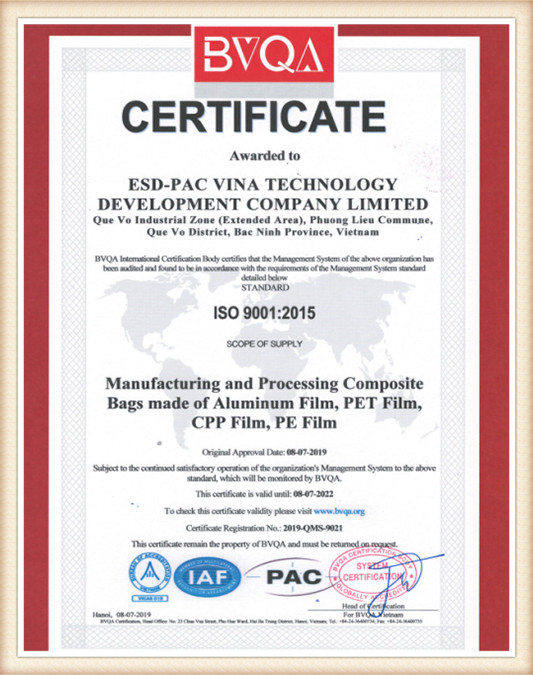
Ensuring complete raw-material traceability, backed by international standards like FDA food contact directives and ISO 9001 quality systems.
A rigorous examination of multi-layer laminates, barrier properties, and functional additive layers for maximum shelf-life
Specialty roasted coffee beans release carbon dioxide gas while remaining highly vulnerable to oxygen, light, and ambient water vapor. Developing a custom coffee bag pouch that provides a shelf life of over 12 months requires a precise combination of engineering, polymer chemistry, and high-barrier technologies. Below is a comprehensive breakdown of standard material structures commonly manufactured for global markets.
| Material Laminate Structure | Key Barrier Metric (OTR / WVTR) | Ideal Application Scenario | Environmental / Mechanical Benefit |
|---|---|---|---|
| PET / AL / LLDPE | OTR < 0.05 / WVTR < 0.05 | Ultra-premium roasts, export-grade packaging | Maximum moisture, oxygen, and UV block. Longest shelf life (18+ months). |
| PET / VMPET / LLDPE | OTR < 0.8 / WVTR < 0.5 | Standard commercial coffee blends, fast-moving retail | Cost-efficient, excellent metalized sheen, superior mechanical strength. |
| Monomaterial (High-Barrier PE / PE) | OTR < 2.0 / WVTR < 1.0 | Sustainable and recyclable-focused coffee brands | 100% recyclable in standard LDPE stream. Reduced carbon tax in EU markets. |
| Kraft Paper / VMPET / LLDPE | OTR < 1.0 / WVTR < 0.6 | Artisanal, natural, and organic coffee roasting houses | Classic, tactile paper texture combined with modern synthetic core protection. |
To ensure optimal freshness, roasters must incorporate high-precision **One-Way Degassing Valves**. Following the roasting process, coffee beans degas significant quantities of carbon dioxide (up to 10 liters of gas per kilogram of coffee over several days). Without a high-quality functional degassing valve, these gases would expand and eventually rupture the hermetic seals of the bag.
At the same time, the valve must dynamically prevent outside air from entering the bag. Modern manufacturing factories use precision automated valve-insertion machinery to secure the valves into the laminate. This integration ensures clean aesthetics, consistent operation, and complete protection against oxidation.
Operating advanced co-extrusion systems and high-speed solventless lamination machinery allows us to manufacture complex multi-layered films without chemical solvent residues. This is crucial for food contact packaging, where zero taste-contamination and complete compliance with FDA regulations are mandatory.
Drawing on our extensive history in industrial electronics shielding and high-barrier ESD protection packaging, we apply strict anti-static controls and contamination-free processes directly to our food-grade manufacturing lines.
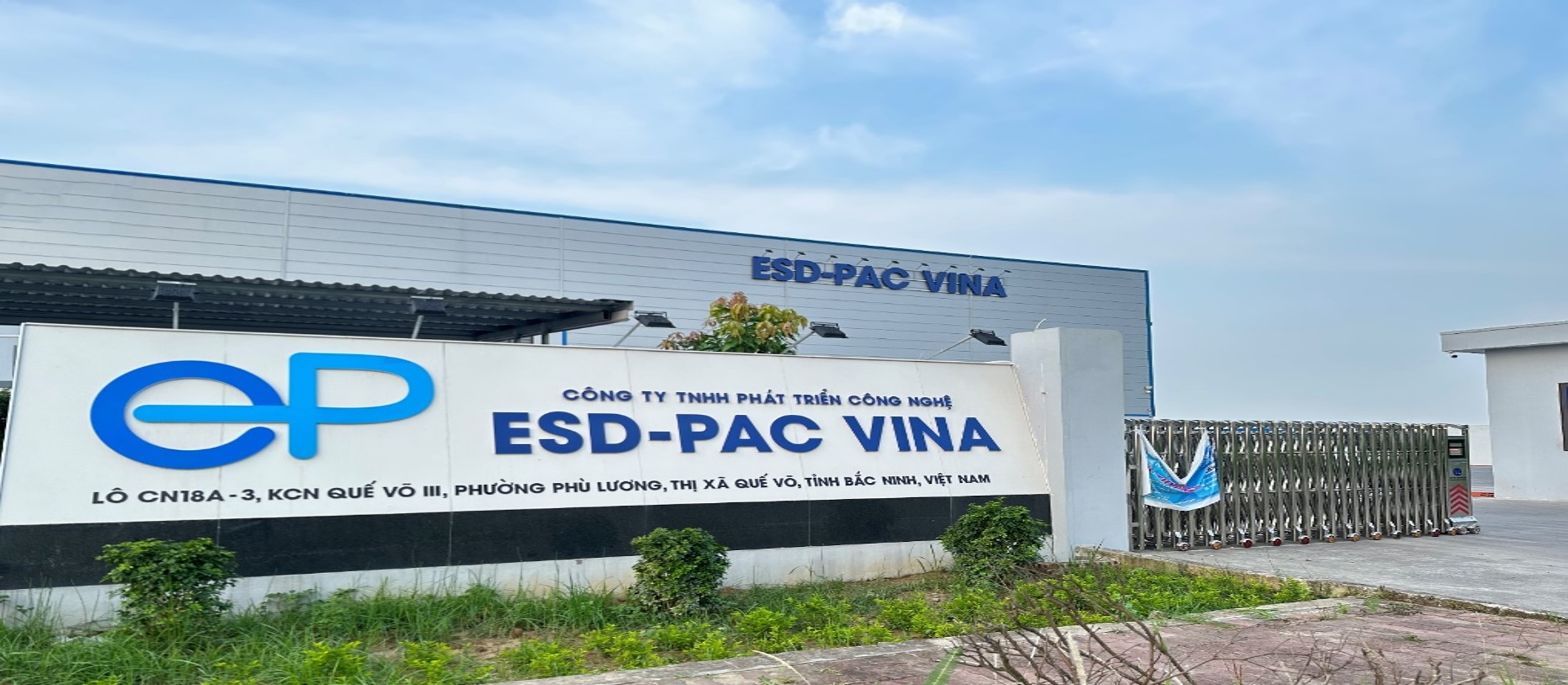
A tour of our state-of-the-art 12,000 square meter industrial park complex in Bac Ninh Province, Vietnam
Established in **March 2018**, ESD-PAC VINA has rapidly grown from a regional packaging supplier into a premier high-tech flexible barrier packaging manufacturer. Strategically located in the prominent **Quy Vu Industrial Park, Bac Ninh Province, Vietnam**, our facility serves as a vital global sourcing hub for high-barrier packaging solutions.
Over the past several years, we have expanded our physical manufacturing footprint to **12,000 square meters**, across two modern, vertically integrated factories. Our strategic location near key Vietnamese shipping hubs ensures fast lead times, efficient customs processing, and streamlined container shipping logistics to North America, the European Union, Australia, and East Asia.
Square Meters Facility
Year Established
Advanced Factories
Quality Inspected
At our core is a deep dedication to integrating **manufacturing, sales, and cutting-edge Research & Development (R&D)**. Our engineering teams continuously test and optimize new polymer materials, focusing on enhanced tensile strength, structural tear propagation resistance, and eco-friendly packaging technologies.
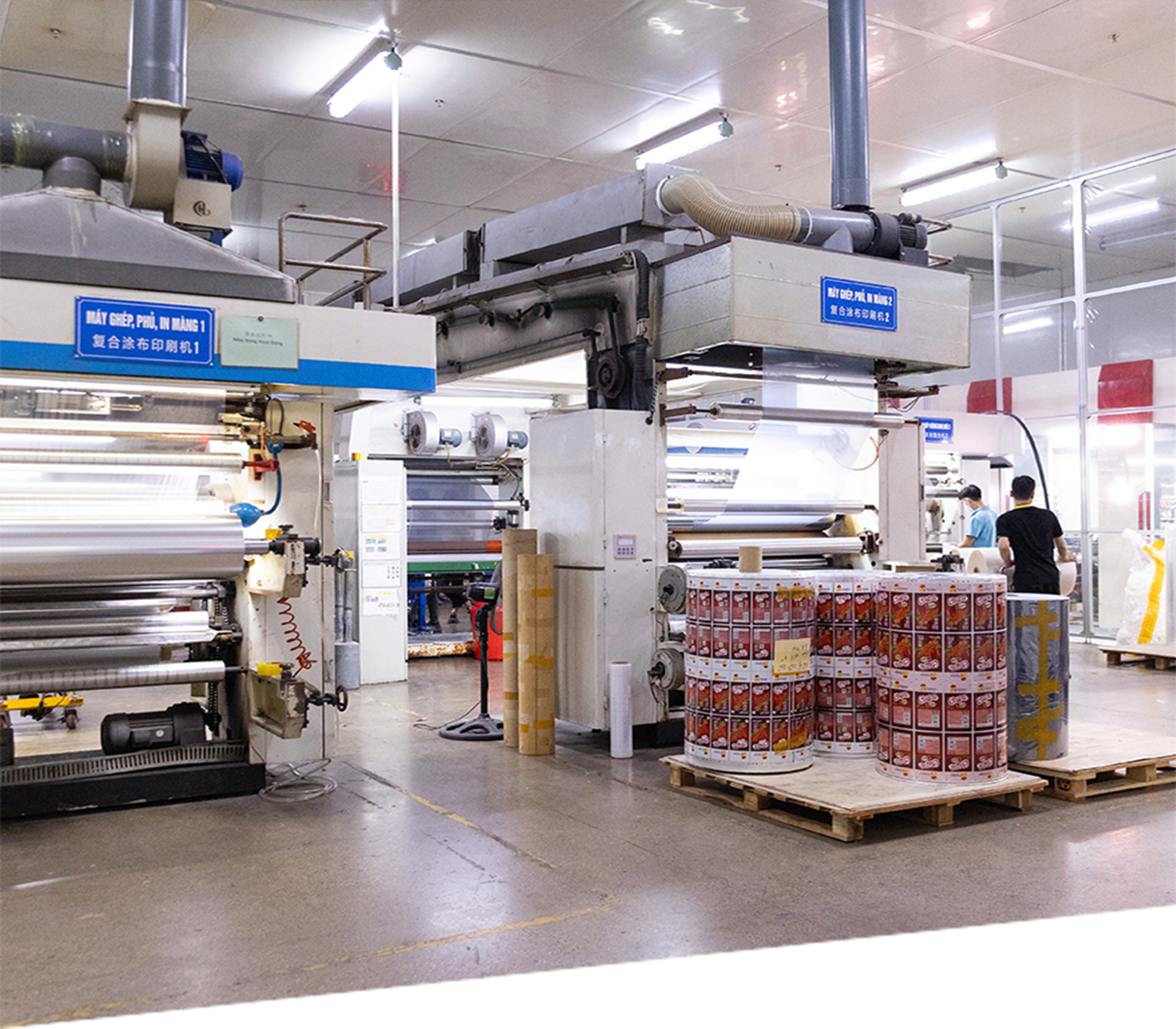
Equipped with state-of-the-art high-speed rotogravure and flexographic printing equipment, we produce highly vibrant, multi-colored custom designs with outstanding graphic registration. Our processes also support elegant matte finishes, spot UV accents, and metallic effects to enhance retail presence.
Our precision slitting and bag-making machinery can manufacture an extensive variety of pouch formats, including stand-up zipper pouches (Doypacks), flat-bottom boxes, and side-gusset bags. These formats are configured to run efficiently on high-speed industrial filling lines, minimizing downtime for our partners.
Maintaining the highest benchmarks of quality control and regulatory compliance for global food and electronics packaging
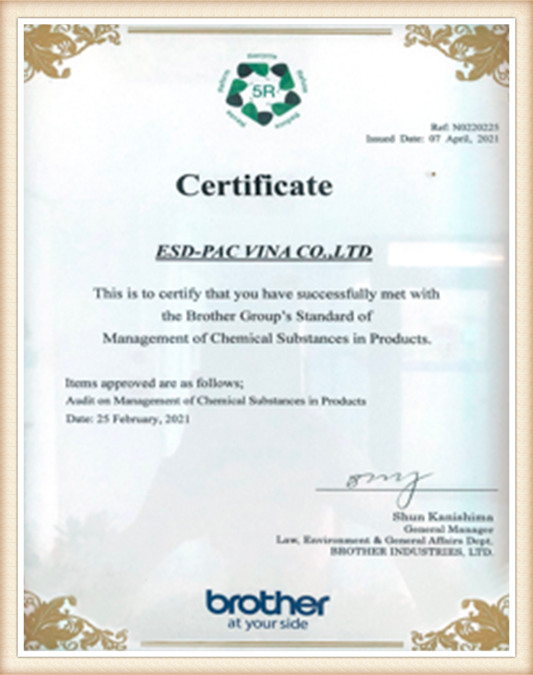
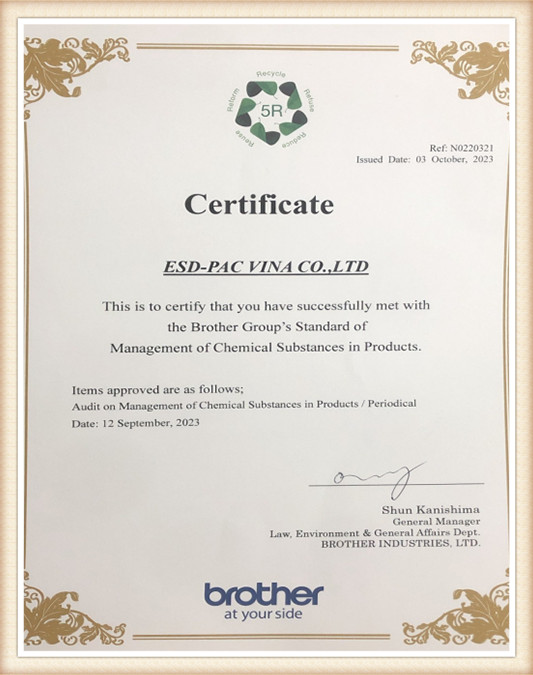
Reliability in global B2B packaging requires strict adherence to international quality systems and comprehensive, verifiable documentation. ESD-PAC VINA operates under strict manufacturing guidelines to ensure complete product safety, structural integrity, and chemical compliance.
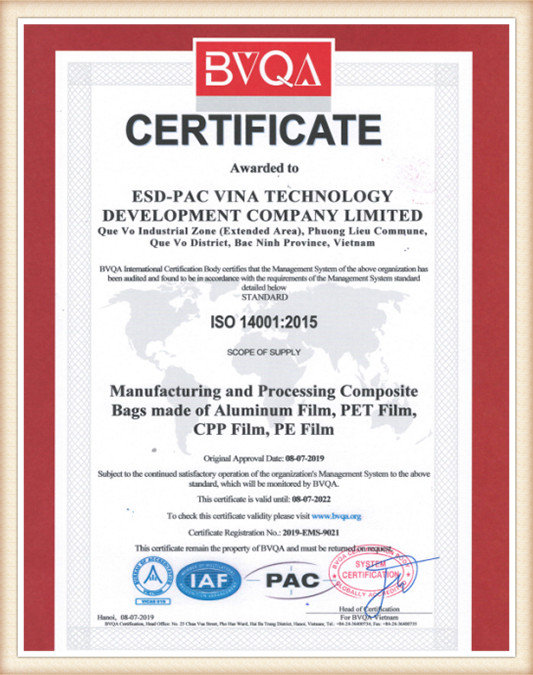
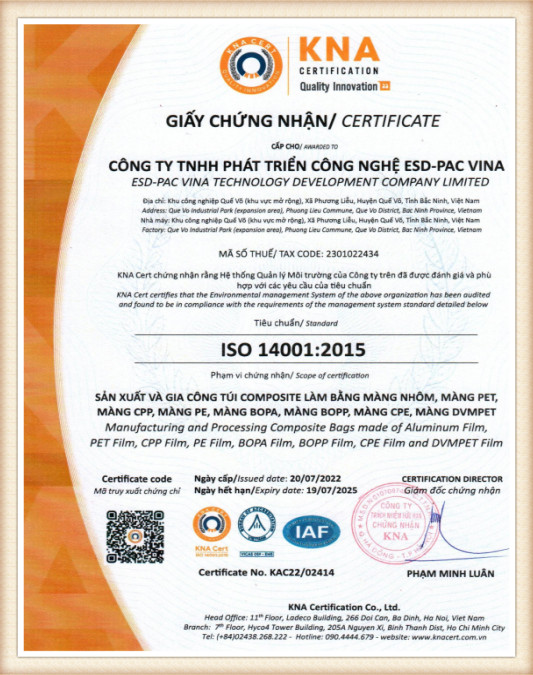
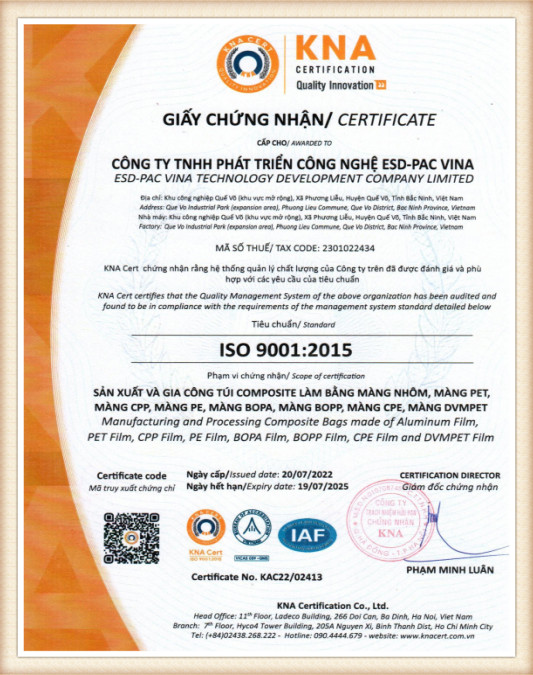
Our manufacturing systems are fully certified across key global frameworks, including ISO 9001 for Quality Management, ISO 14001 for Environmental Management, and ISO 18001 / ISO 45001 for Occupational Health and Safety. Additionally, we hold prestigious certifications such as API 6D, API 607, and CE compliance, reflecting our deep commitment to precision engineering.
A forward-looking perspective on sustainable barriers, smart packaging technologies, and next-generation designs
The global coffee packaging industry is quickly moving toward absolute circularity. As strict regulatory frameworks like the European Green Deal and Extended Producer Responsibility (EPR) programs expand worldwide, roasters must adapt. In response, ESD-PAC VINA’s R&D teams are actively focusing on three major technology areas:
Traditional high-barrier packaging often laminates incompatible materials like PET, aluminum foil, and PE together, making them difficult to recycle. Our new technological roadmap introduces **Mono-Material PE pouches**, utilizing high-density MDO-PE (Machine Direction Oriented Polyethylene) films paired with barrier-coated LLDPE. This delivers the necessary structural stiffness, heat resistance, and gas barriers while remaining fully recyclable within standard waste streams.
For brands seeking bio-based solutions, we are developing multi-layer compostable laminates that combine specialized PLA (Polylactic Acid) and PBS (Polybutylene Succinate) polymers. These advanced materials break down safely in industrial composting environments, significantly reducing plastic waste.
Using state-of-the-art solventless lamination, we eliminate VOC emissions from the manufacturing process. We also offer advanced custom aesthetic textures, such as spot glossy coats, tactile paper finishes, and holographic anti-counterfeiting elements. These features help specialty brands stand out on crowded retail shelves while maintaining excellent oxygen and moisture protection.
Expert answers addressing MOQ, barrier properties, custom configurations, and global supply logistics
For custom printed pouches featuring rotogravure printing, the standard MOQ typically starts at 10,000 to 20,000 units per design variation, depending on the bag's dimensions and material complexity. For test markets and emerging brands, we also offer custom digital printing options with much lower MOQs, enabling efficient prototyping and market entry.
Roasted coffee naturally releases carbon dioxide (CO2). If sealed in an airtight pouch, these gases would cause the package to swell and burst. Our one-way degassing valve allows internally generated CO2 to vent safely. At the same time, it maintains a hermetic seal against outside air, preventing oxygen from entering and oxidizing the coffee's aromatic oils.
Yes. Our custom-formulated mono-material PE structures are engineered with a heat-resistant outer layer and a fast-sealing inner layer. This design offers a broad sealing temperature window, allowing them to run efficiently on standard automatic filling and sealing equipment without causing seal defects or burning.
Sourcing from Bac Ninh, Vietnam, provides highly competitive manufacturing costs, a skilled labor force, and favorable tariff structures, including active FTAs with Europe, North America, and RCEP countries. In addition, our close proximity to major deep-water ports ensures reliable shipping schedules and efficient global transit logistics.
Partner with ESD-PAC VINA to elevate your brand value, protect structural integrity, and optimize shelf-life
 ESD-PAC VINA